

Chains
Ethereum and EVM Networks in AirVault
Ethereum and EVM networks in AirVault: the m/44'/60' derivation path, Monad testnet, RPC and explorer providers, MetaMask and Rabby, and known limits.
Lensly holds Ethereum and EVM keys and signs EVM transactions and messages. Lumio reads balances and history on Ethereum and other EVM networks, and it broadcasts the transactions that Lensly signs. This page covers the derivation path, the networks, the providers, and the known limits.
Derivation Path
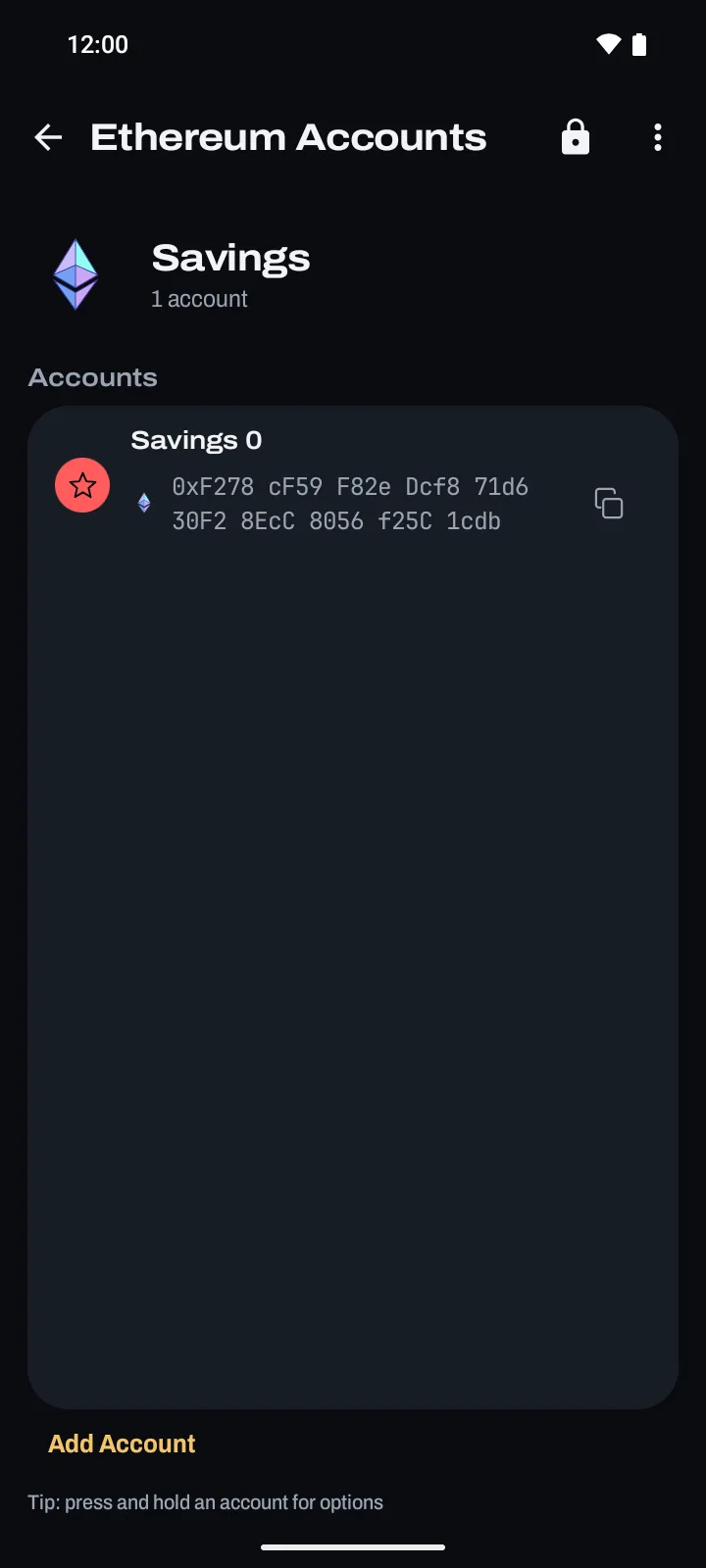
Account N uses the path m/44’/60’/N’/0/0. It matches Ledger Live, so a wallet restored on a Ledger shows the same Ethereum addresses. The Ethereum and EVM chains share this one path.
Networks
- Lensly’s network catalog lists many EVM networks. Ethereum mainnet is the primary one and is enabled by default. Monad Testnet, chain ID 10143, is the only testnet in the release catalog.
- Lumio has a Mainnet side and a Testnet side. Ethereum is the primary mainnet network, and Monad Testnet is the primary testnet network.
- In its EVM settings, Lumio can add a custom chain and set your own RPC address for any chain.
Balance Providers
Lumio reads EVM balances from RPC providers and block explorers.
- Lumio asks the providers it has enabled, and a read stops at the first one that answers. Routescan, Etherscan, Blockscout and 3xpl are explorers, and Blockchair serves Ethereum mainnet too. You can enable and reorder providers on the Data Providers screen in Lumio’s settings.
- Etherscan answers only with a key of your own.
- Every provider that Lumio asks for a read sees the address it asks about.
- A chain whose RPC address you set in EVM settings is read from that address alone, so no public provider sees it.
- Prefer RPC over Explorers is off by default. When it is on, balance reads use only RPC providers, so no explorer sees them.
What Lensly Reviews
- Lensly decodes approved contract calls from its registry and shows each step in plain language.
- Lensly warns about a contract call it cannot read, and shows the raw data in full. In Settings, Unknown Contract Calls switches this between Warn, which is the default, and Refuse.
- Since Lensly 1.1.0, Lensly shows a DANGER warning when a transferFrom moves tokens from another account.
- Lensly signs personal messages, typed data (EIP-712) and the off-chain domains used by Hyperliquid and AsterDex.
- A personal message with no chain is treated as an Ethereum mainnet request.
Known Limits
- Lensly accepts calldata up to 16 KiB.
- Rabby and MetaMask see only the Ethereum accounts that Lensly lists for them. See How to Connect MetaMask or Rabby to Lensly.
- Lumio’s send form has an Advanced sheet for the nonce and fees.
Next Steps
Read Solana Support in AirVault for the next chain family. To send an ERC-20 token, follow How to Send a Transaction with Lensly and Lumio.